
THE NO-NONSENSE GUIDE · FIRE LOG BOOK
Routine fire door checks
Practical companion guidance for routine fire door checks.
Written companion guide · Reviewed 14 October 2026
What and why
A fire door is part of the building fire protection. Routine checks help identify damage or changes affecting its operation. They do not establish its rating or replace a competent assessment of its suitability.
Check the assessed arrangement
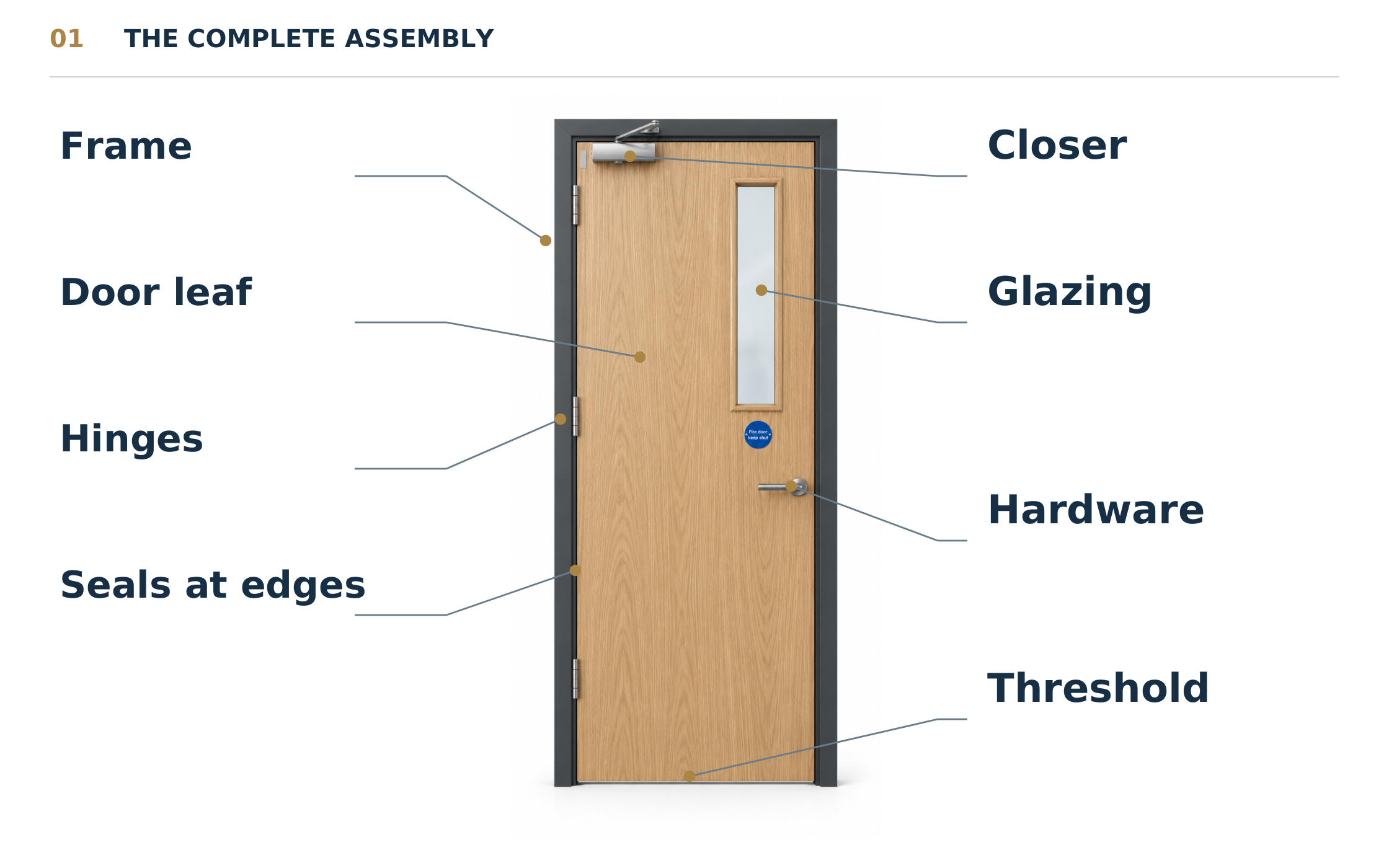
Identify the door reference. Look at both sides, the frame, visible seals, glazing and hardware. Check for damage, loose components, unauthorised alterations and obstruction. Judge seals and hardware against what is required for that door, not a universal checklist.
Observe closing
Where a self-closer is required, release the door from the positions specified in the site procedure, including a small opening where appropriate, and observe whether it closes fully without help. Confirm latch operation where a latch is part of the arrangement. Check hold-open releases using the authorised procedure.
Do not diagnose by guesswork
Record a closer failure, visible gap, damaged seal or altered door and seek competent advice where needed. Do not plane the leaf, fit improvised seals or adjust safety hardware without suitable competence and authorisation.
Residential duties
In England, relevant residential buildings over 11 metres have additional checking duties for communal and flat entrance fire doors. Confirm scope, access attempts and the required intervals separately. This general record is not a substitute for those arrangements.
Use with your premises procedure
This guide supports the printed record. It does not replace the fire risk assessment, system instructions, required specialist records or competent assessment. Work within your training and authority.