
THE NO-NONSENSE GUIDE · FIRE LOG BOOK
Emergency lighting
Practical companion guidance for emergency lighting.
Written companion guide · Reviewed 14 October 2026
What and why
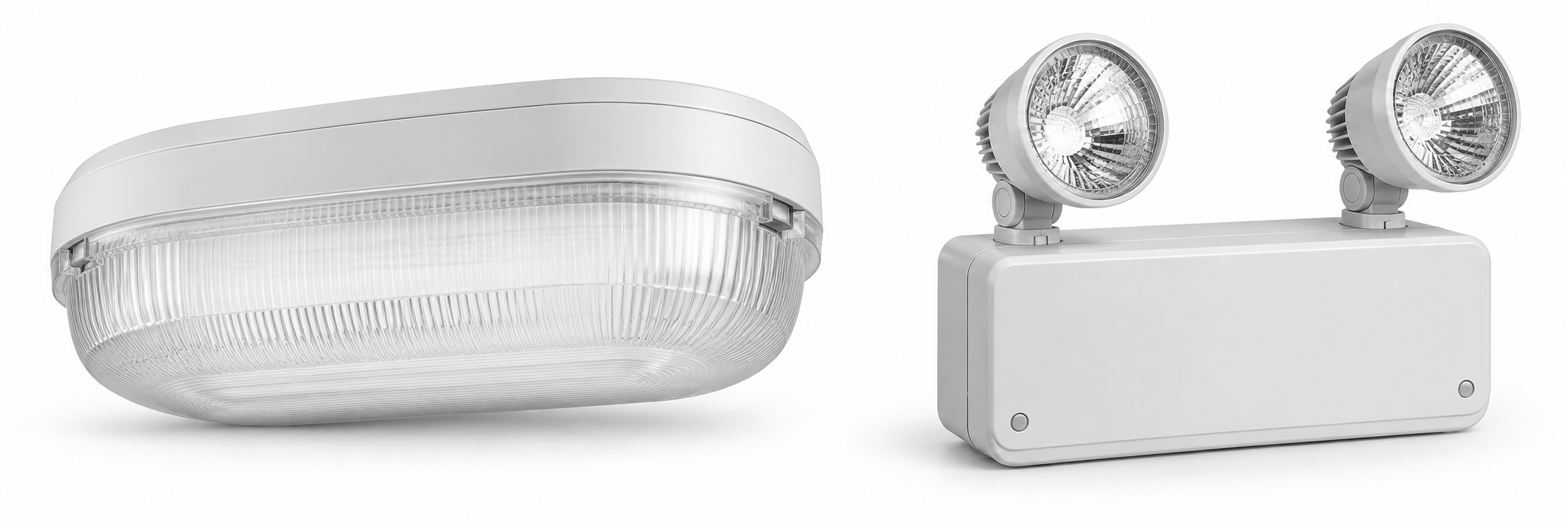
Emergency lighting supports escape when normal lighting fails. A short functional test and a full duration test answer different questions. Seeing a charge indicator alone does not confirm the fitting operates on its emergency supply.
Prepare safely
Confirm the system type and authorised test method. Consider occupied hours, vulnerable users, darkness and safe access. Use trained personnel, available keys and a torch where necessary. Do not interrupt unrelated essential electrical supplies.
Functional test
Use the designated test facility under the premises procedure. Observe each fitting within the test scope and record its reference and result. Note failure to illuminate, damage, obstruction or unexpected indication. Restore the normal supply and confirm the expected charging or normal indication.
Duration and recharge
Plan rated-duration testing under the system maintenance programme. Record the required duration, actual results and any failed fittings. Consider recharge time and the protection available after the test; a recently discharged system may not provide its full duration immediately.
Automatic and central systems
For self-test or centrally monitored equipment, retain the test reports and review failures. Do not treat the absence of a manual test entry as proof that testing was omitted, or an automatic report as proof that defects were repaired.
Use with your premises procedure
This guide supports the printed record. It does not replace the fire risk assessment, system instructions, required specialist records or competent assessment. Work within your training and authority.